Thermal Oil Rotary Joints for Hot Roller Applications
On calenders, laminating presses, dryer rolls and heated platens that use thermal oil as the heat transfer medium, the rotary joint continuously delivers hot oil into the rotating roll. These applications share three characteristics: high oil temperature, long continuous running hours, and costly consequences if leakage occurs. Drawing on DEWEL's experience with thermal oil service in the 180-320 degrees C range, this article outlines the key points for selecting and applying rotary joints on hot roller equipment.
1. Start with Three Factors: Temperature, Speed and Bore Size
Typical oil temperatures for heated rolls fall between 180 and 320 degrees C. Confirm the actual inlet oil temperature and the roll surface temperature before anything else, rather than relying on the nameplate alone. Temperature determines the grade of the seal materials and the structure. Next, confirm roll speed: calendering and laminating lines usually run at low speeds of a few dozen to a few hundred RPM, while high-speed dryers require additional checks on dynamic balance and seal wear. Finally, size the bore: DEWEL rotary joints cover DN6 to DN350, and the bore should be calculated from the oil circulation flow rate and line velocity to prevent erosion of the sealing faces.
2. Single Passage or Dual Circuit
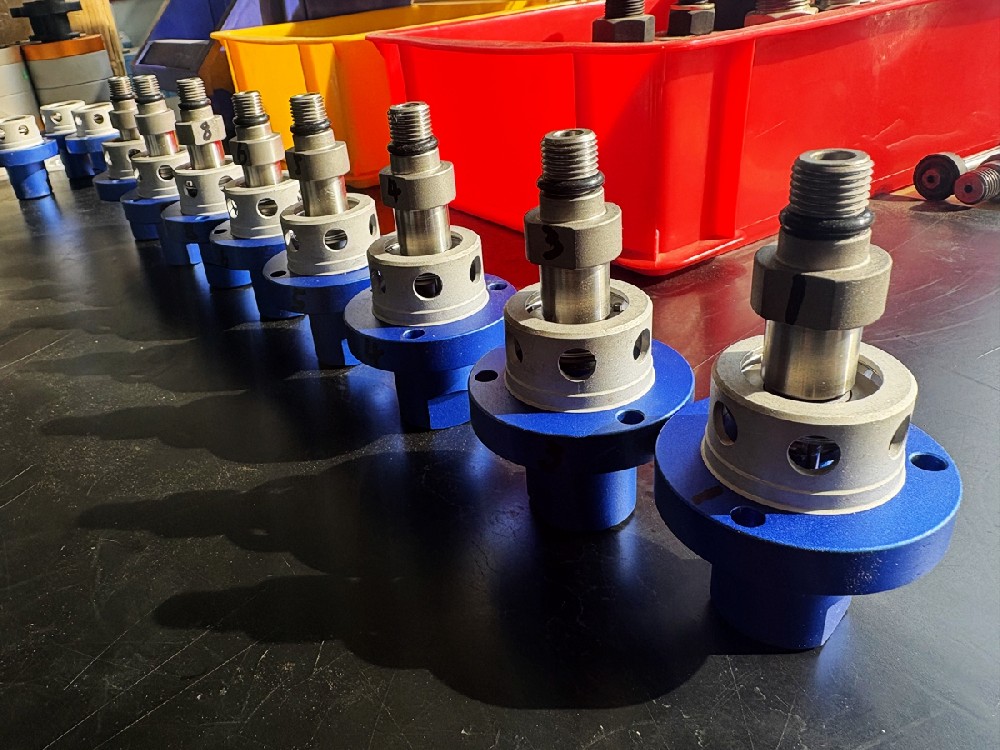
Most thermal oil systems use one inlet and one outlet: hot oil enters the roll cavity through the inlet port and returns to the boiler loop after heat exchange. If the roll carries one single passage joint at each end, one for supply and one for return, that is the standard single passage arrangement. Where installation space is limited and both connections must be made at the same end, a dual circuit rotary joint places the inner and outer passages coaxially so that supply and return do not interfere with each other. Choose the structure according to the roll design and maintenance access, not simply by copying the original drawing.
3. Sealing Considerations at High Temperature
Sealing requirements in thermal oil service come down to three points: heat resistance, coking tolerance and wear compensation. A spherical sealing structure with graphite seal rings remains stable at high temperature, while a balanced design reduces face pressure and slows wear. Spring compensation keeps the faces in contact as they wear, extending service intervals. Because thermal oil gradually oxidizes and forms coke at high temperature, check whether the seal chamber can be cleaned easily, and ask the supplier for a seal material package matched to the actual oil temperature.
4. Installation Is Where Most Failures Start
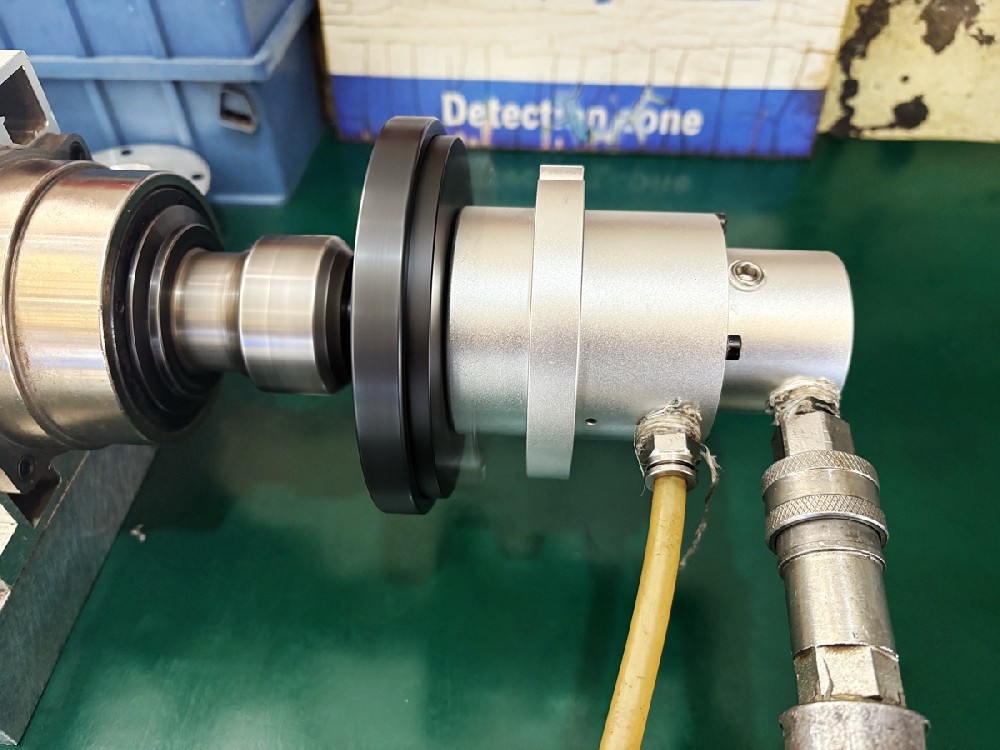
Field reports show that most early leakage cases are caused by installation rather than by the joint itself: misalignment between the joint and the roll axis, rigid piping that transfers pipeline stress into the flange, or supports tightened so firmly that the compensation travel is locked. The correct approach is to fit a flexible metal hose behind the joint so it can float with the roll, verify concentric alignment without forcing, and tighten the pipeline flange bolts to the torque specified on the drawing.
5. Recommended Maintenance Practice
For high temperature thermal oil systems, three routine checks are recommended: inspect for leakage at the sealing faces and watch for abnormal temperature rise; monitor oil quality by testing acid value and carbon residue on a regular schedule, since heavily coked oil accelerates seal wear; and follow a slow warm-up procedure at cold start to avoid thermal shock cracking of the seal rings.
6. When a Custom Design Is Needed
When the roll carries an internal syphon tube, requires coaxial multi-passage flow, or must fit the dimensions of an existing machine, standard series may not be a direct match. DEWEL provides custom designs from DN6 small bores up to DN350, all manufactured under an ISO 9001 certified quality system, with installation drawings and technical support included.
For detailed specifications, see our rotary joint series, dual circuit rotary joint, pipeline flange rotary joint and custom products.
Related reading:Selecting Cooling Water Rotary Joints for Injection Molds · Coolant-Through Rotary Joints in Machining Centers · Rotary Joint Seal Materials: Graphite, SiC and Filled PTFE