PUBLISHED ON:
11-18,2026
Under the upper structure of an excavator sits a central rotary joint. Travel, swing and boom cylinder oil all pass through it. The most common warranty call is not a big oil leak but one circuit getting slow: the machine still swings, yet the bucket curls weakly. Nine times out of ten one passage leaks internally and pressure crosses into another circuit. Chasing seals instead of the passage wastes three rebuilds.
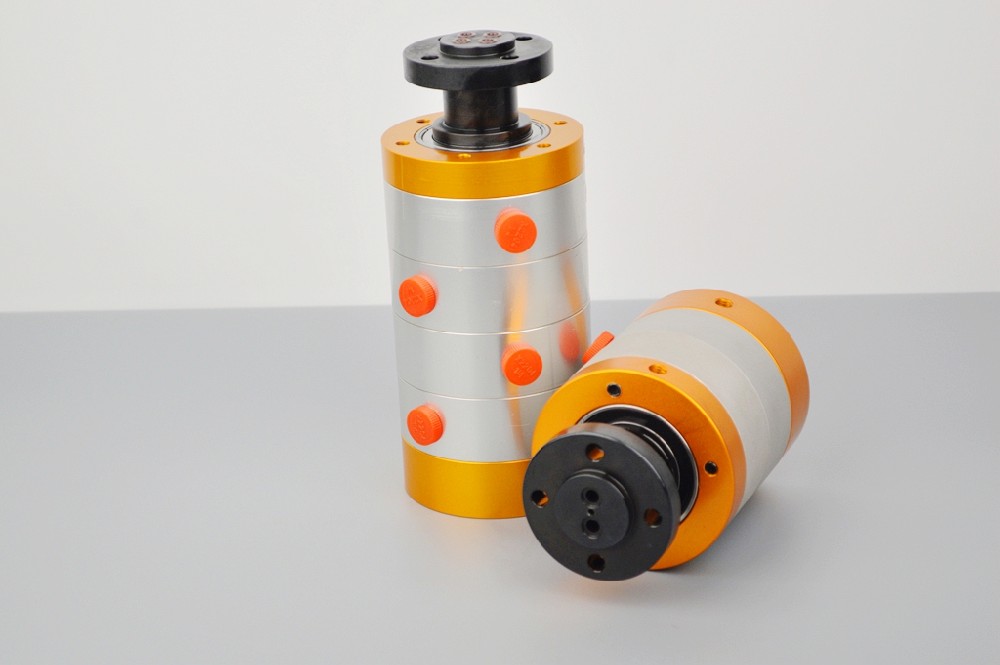
DEWEL multi-passage rotary joint, actual product
Excavators, truck cranes and aerial platforms load the joint very differently. An excavator typically runs 4 to 8 passages on the main oil lines at 25 to 35 MPa. A crane carries fewer circuits, but hoist and boom peaks sit in the same range. Aerial platforms mostly use electro-hydraulic proportional valves, 3 to 6 passages at a lower 10 to 20 MPa. Ask for the function chart before quoting: one action, one passage, plus one spare. More passages are not better. Every extra passage adds one leak path on the end face and one more machining tolerance to hold.
Construction sites mean mud, water and stone dust. The lower end of the joint sits less than half a meter off the ground, where track splash hits the housing directly. Holding 35 MPa is the easy part. Mud creeping along the shaft shoulder into the seal face cuts radial grooves into the end face, and internal leakage shows up within six months. That is why our construction machinery versions use a double barrier: a labyrinth dust ring plus a lip seal. It adds a few dozen RMB and can double service life. A quick field check: mud streaks on the housing OD mean the dust ring is already worn through.
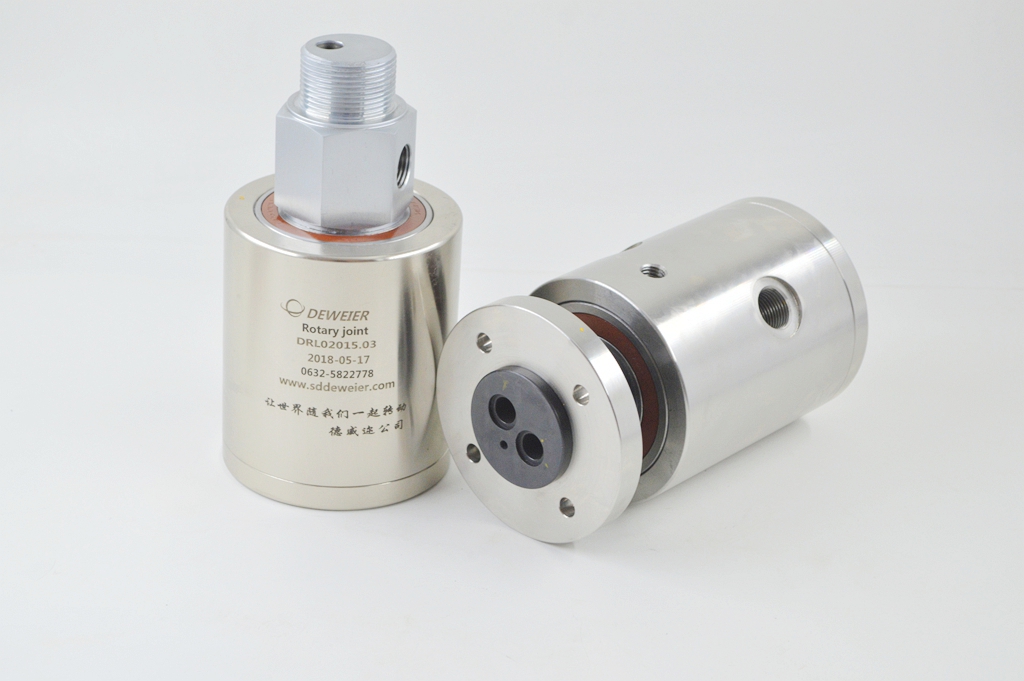
DEWEL multi-passage rotary joint, passage end face
The pressure field on the selection sheet should be the relief valve setting, not the pump nameplate. A main pump tagged 31.5 MPa with relief set at 35 MPa can spike another 10 percent on impact. A joint chosen against 31.5 MPa will open the end face briefly under shock. The symptoms are jerky motion and a hot return line. Crane boom-raising shows this most: the pressure peak when the hoist starts under load is far above steady state.
The joint is a fixed shaft inside a rotating housing. Torque the mounting flange bolts diagonally and evenly, per the drawing, in one pass. We have seen units assembled with only three bolts snug; within two days the housing tilted and the seal face wore on one side. Keep hose transitions between upper and lower structure. Pulling steel pipe straight into the ports loads every assembly error into the joint.
Inspect the end face first. Even wear with shallow marks can be lapped and refitted with new seals. One-sided wear or grooves deeper than 0.3 mm means the housing has tilted or grit got past the dust ring, and a new joint costs less than the second repair. The middle path is the expensive one: re-repair after three months, with labor exceeding the price gap of a new unit.
If the duty cycle, relief pressure and mounting dimensions are ready, send them over. Product range: central rotary joints and a specification table, custom passage layouts under custom products. Related: Descaling Lines: Selecting a High Pressure Rotary Joint, Rotary Joint Certification: What Buyers Should Check.
11-17,2026
GB/T and JB/T test methods belong in acceptance clauses. ISO...
11-13,2026
Graphite, silicon carbide and filled PTFE faces wear in very...


