PUBLISHED ON:
11-20,2026
On a DN300 cooling water line, the failure that actually stops commissioning is rarely pressure. It is the flange: bolt holes that do not line up, a bolt circle a dozen millimeters off. Everyone remembers to ask for bore size and pressure rating, and the flange standard gets left to the end, or never asked at all. This walkthrough follows the order a plant engineer should actually use when specifying a flanged rotary joint for large-bore pipework.
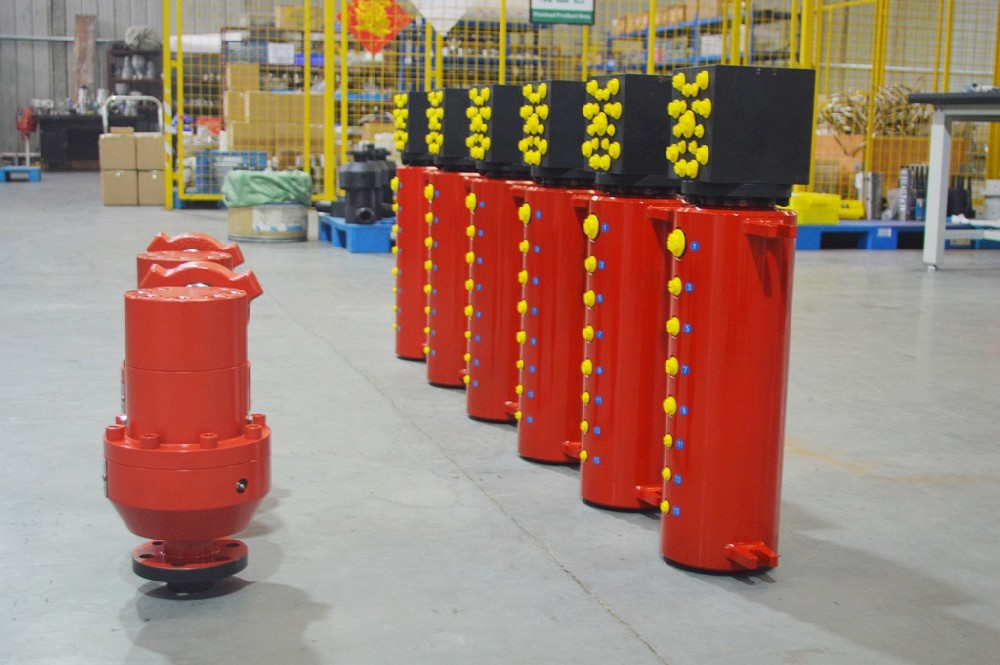
Coiled tubing drum ultra-high pressure rotary joint (live shot)
From DN200 to DN350, rotary joints are flange connected. Three standards dominate: JIS 5K/10K, DIN PN6 to PN16, and ANSI Class 150/300. Flange OD, bolt count, hole diameter and bolt circle diameter differ across all three, with no interchangeability. For the same DN300, a JIS 10K flange and an ANSI 150 flange differ clearly in OD and bolt count. DEWEL covers DN6 to DN350 and can drill flanges to JIS, DIN or ANSI, or to a customer drawing. Send four items before ordering: flange OD, bolt count, bolt circle diameter and pressure rating. It beats rework on site.
40 bar is not high for the joint body itself; DEWEL units are rated to 138 MPa. But thrust scales with area: on a DN300 sealing face of roughly 0.3 m, 4 MPa of working pressure produces about 28 kN of axial thrust, close to 3 tons, all carried by the support bearing. Bearing size, raceway hardness and clearance control are where the real cost sits in a large-bore joint. Report steady working pressure and peak pressure separately; intermittent shock and continuous running place very different demands on the bearing.
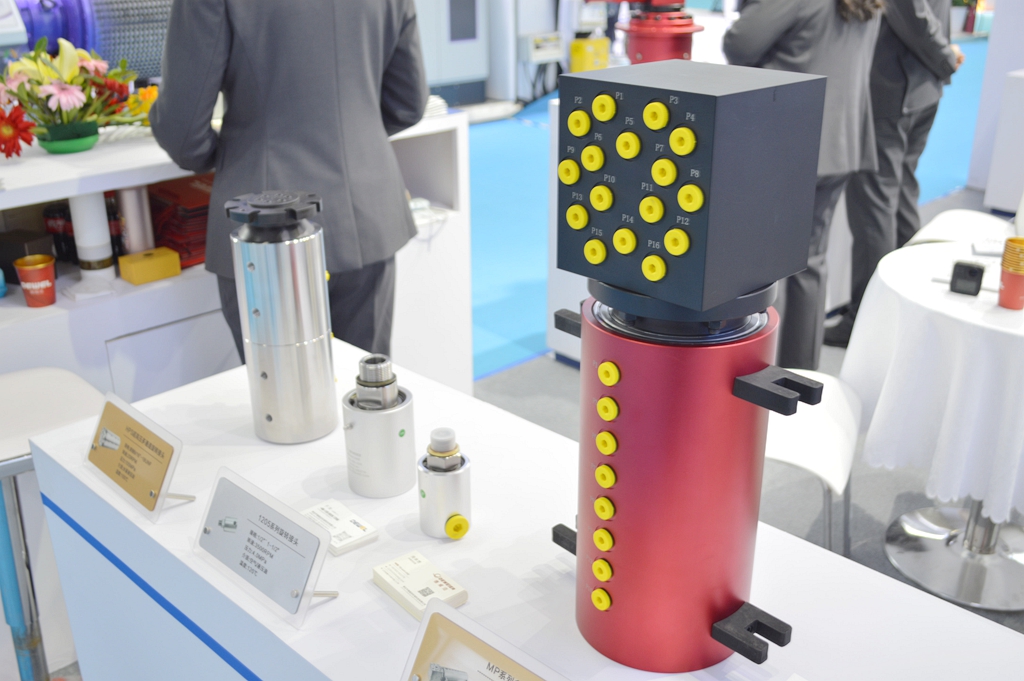
Multi-passage coiled tubing rotary joint for oilfield services (live shot)
Cooling water and seawater lines mostly run near ambient, but ballast lines and heat-traced lines touch both ends. At -30 C, standard nitrile rubber embrittles and cracks; a low-temperature compound is needed. At 180 C, elastomer seals give up; move to packing or clearance seal designs. Thermal oil service at 180 to 320 C is a different product line with a different seal structure, so do not mix the two.
First, chloride corrosion: use 316L or duplex shells; painted carbon steel rarely lasts three years in seawater. Second, scaling: calcium and magnesium deposits seize sealing faces, so choose a flushing port and backwash it regularly. Third, drain on shutdown: seawater left standing in the line crystallizes on the sealing faces, and the next start-up runs dry. That is what kills most units in seawater service.
Large-bore pipe is heavy. A cantilevered connection puts the full bending moment on the bearing, so support the line near the joint. Thermal expansion is rarely absorbed by pipe weight alone; fit an expansion joint. Set the anti-rotation linkage until both flange faces are parallel before bolting up, and never force it.
A sensible order for specifying a large-bore flanged rotary joint: confirm the flange drilling, then check thrust and bearing, then choose seal material by media and temperature, then handle installation. If a duty is unclear, send the media, temperature, pressure and pipe weight and we will size it against real figures. See our pipeline rotary joint series and custom engineered series. Related: high pressure descaling rotary joint selection, five key parameters when choosing a rotary joint.
11-19,2026
How to count passages, keep oil, air and coolant apart, and ...
11-17,2026
GB/T and JB/T test methods belong in acceptance clauses. ISO...


