PUBLISHED ON:
11-19,2026
Eight stations, one shaft. Clamping oil, air blow-off and spindle coolant all feed through the same rotary joint. On the test run station three clamps late, the gauge reads normal, and when we pull the joint there is oil in the air passage. The seals are fine. The passage layout was wrong on the drawing.
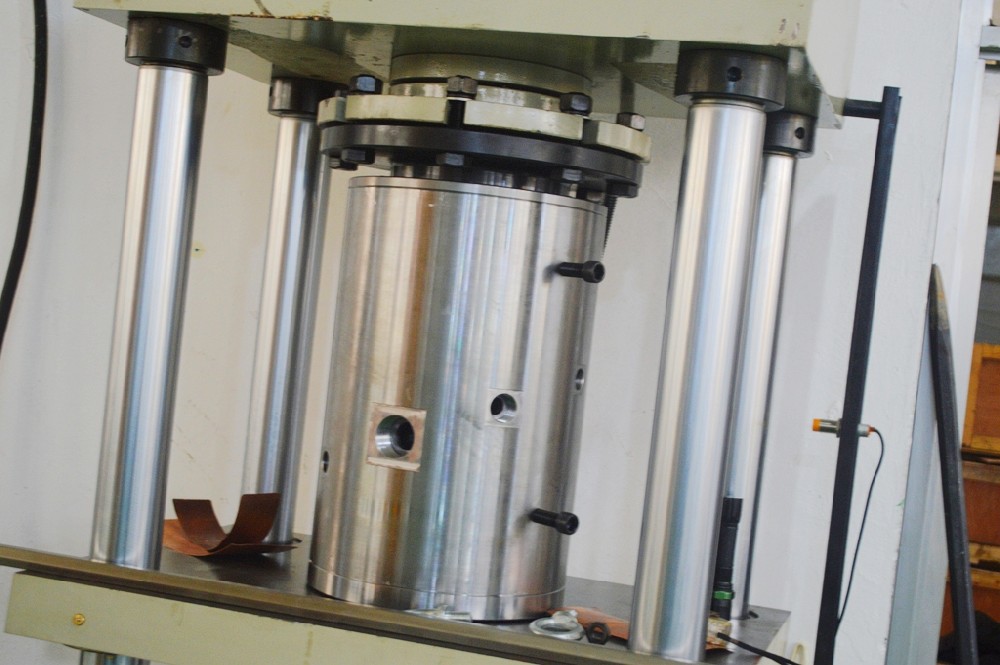
DEWEL multi-passage rotary joint, workshop photo 1
Most inquiries say four passages for now, more later. Adding a passage means a new shaft and housing, priced close to a new joint. Count every function once: clamp, unclamp, air blow-off, coolant in and out, through-spindle coolant, air gauge check. Eight is common, twelve happens. A spare passage costs far less than a rebuild six months later.
Do not overdo it either. More passages mean a thicker shaft, a larger seal ring diameter, higher surface speed and more heat at the same rpm. Above twelve passages we ask about mounting space first. If it is tight, the answer is a split design or two joints in series.
Fixture oil runs 10 to 25 MPa, air 0.5 to 0.7 MPa, coolant 0.3 to 0.6 MPa at 25 to 35 C. Two orders of magnitude apart, so one seal design will not serve all three. Put high pressure near the axis, where the seal ring is smaller and face pressure is easier to control. Put the low pressure, high flow water circuit on the outer ring, where the passage can be large.
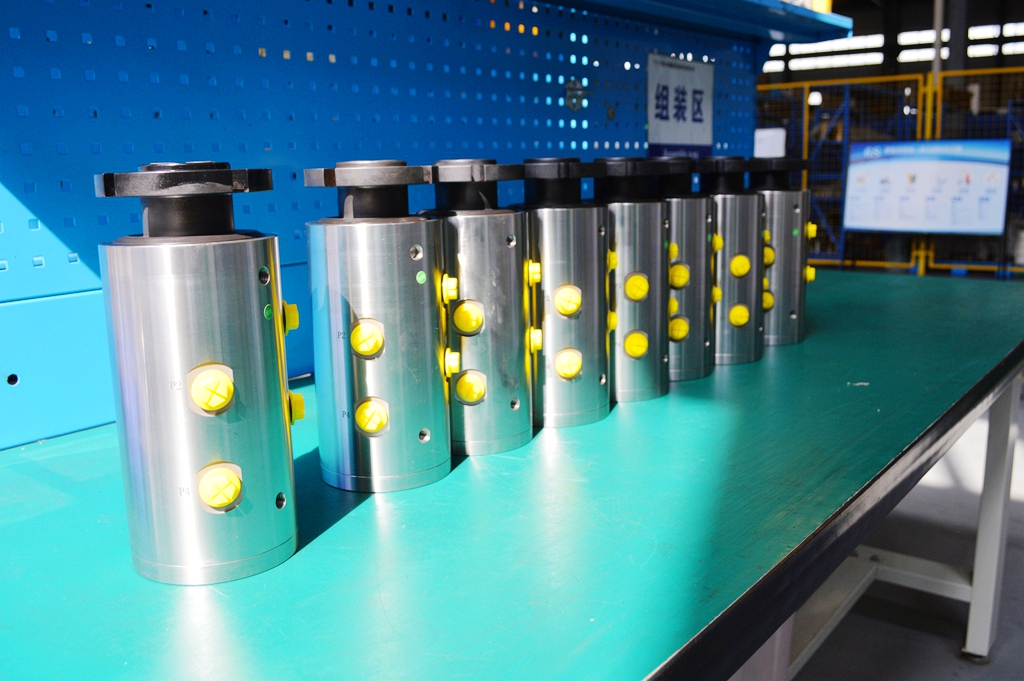
DEWEL multi-passage rotary joint, workshop photo 2
Keep air and water apart. Water in an air line kills solenoid valves and cylinders first, and that repair costs more than the joint. Either place an oil passage between them or use two separate shafts. Those are the two comments we make most often at drawing review.
Case drain is the first thing dropped on multi-line hydraulic jobs. Merge the returns from several actuators and housing pressure climbs past 0.5 MPa, lifting the seal faces. The symptoms are slow motion, higher oil temperature and foam in the tank. We ask for a dedicated drain line, back pressure under 0.2 MPa, and a drain bore no smaller than the supply bore.
Skip this and three seal changes will not fix it. One machine went through two seal sets in three months; the drain line was one size smaller than the supply line.
Every passage needs a defined internal leak path. Where seepage is acceptable, route it to the low pressure side or a collection chamber. Where mixing is not acceptable, oil against air gauge for example, add an isolating passage. Leave it off the drawing and the fitter guesses, which ends in cross contamination that nobody can trace the first time.
138 MPa and 30000 RPM are capability limits, not normal duty. Most multi-passage joints on an index table run 30 to 60 rpm. At a 60 mm seal ring that is only 0.19 m/s, a low speed, heavy load case where eccentricity, dirt and thermal distortion matter more than heat. If the machine indexes fast above 300 rpm, specify the high speed design instead, with different spring compensation and bearings.
Torque the bolts in a diagonal pattern to the drawing value, once. Leave a flexible hose section in the piping; pulling rigid pipe straight onto the joint puts every assembly error into the seal. Number the passages on both the joint face and the drawing. A crossed line at site usually costs a full day of fault finding.
Oil in the wrong line: open the joint and see which two seal faces carry oil, usually one high back pressure passage pushing past a neighbour. Air in the water: pressure drop plus bubbles at the tank, normally a swelled O ring on the air passage. Slow action: measure housing drain pressure before blaming the joint. In that order, the diagnosis takes half the time.
Sizing needs medium, pressure, temperature, rpm, passage count, bore per passage and mounting space. Miss one and we estimate on typical duty, with no guarantee it will hold on your machine. For heat transfer oil, state the temperature band; we grade seal materials across 180 to 320 C, and one grade off costs a large share of service life.
Series overview: multi-station rotary joints, with individual sizes in the data sheet. For high pressure, multi-line duty see hydraulic slip rings; unusual passage layouts are built to drawing: custom builds. Related: Central rotary joints: passages before pressure and What buyers should check in joint certification.
11-19,2026
How to count passages, keep oil, air and coolant apart, and ...
11-17,2026
GB/T and JB/T test methods belong in acceptance clauses. ISO...


