PUBLISHED ON:
11-27,2026
Last month a caller told us his dual-passage rotary union had burned through two mechanical seals in three months, running a 50% glycol-water solution. Both failures looked the same: a bright ring worn into the seal face. The cause was simple. He moved a union sized for thermal oil duty straight onto coolant and changed nothing inside. Pairing media with seal material is the step most often skipped in sizing, and skipping it shows up as repair bills.
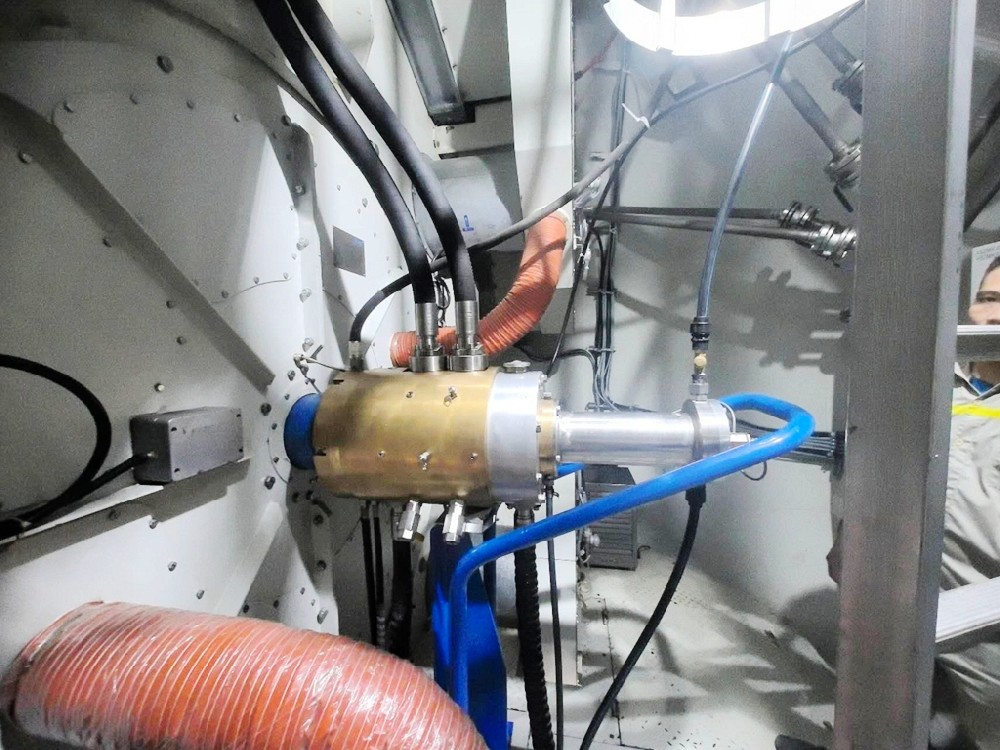
Turbine oil-supply rotary union (1)
Most buyers check pressure and speed first, because a wrong number fails on the spot. Media gets checked last, on the assumption that spinning is spinning. The reality is that seal materials tolerate media very differently. One silicon carbide face pair can run three years on clean water and wear through in three months on 8% solids slurry. DEWEL unions cover DN6 through DN350 at up to 138 MPa, handling media from clean water to cutting fluid at 30,000 RPM. The rule is simple: state the media first, then pick the material.
Clean water still needs three answers: temperature, solids content and water-treatment chemicals. At room temperature, graphite or silicon carbide both work; above 60 degrees C graphite weakens and we suggest silicon carbide against silicon carbide. Glycol mixes of 30% to 50% actually lubricate better than water, which helps the seal, but some corrosion-inhibitor packages attack nitrile rubber, so the O-rings should move to FKM. Cutting fluid carries oil and additives that raise viscosity, so on a dual-passage union each passage should be confirmed separately rather than assumed interchangeable.
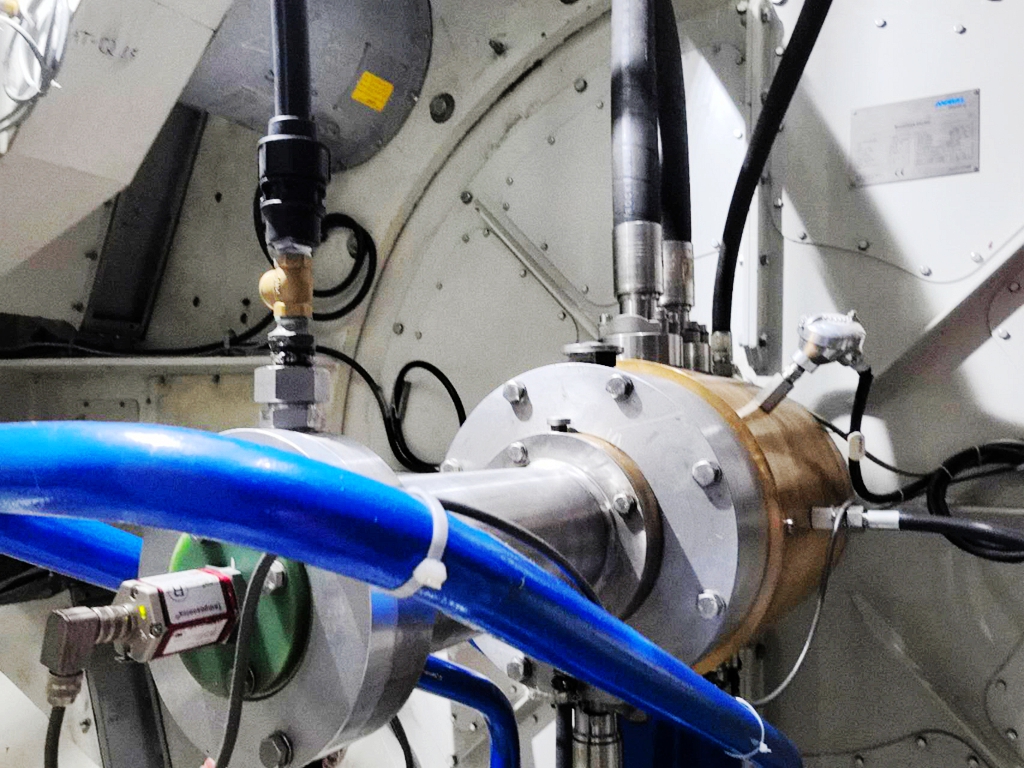
Turbine oil-supply rotary union (2)
Thermal oil duty runs 180 to 320 degrees C. FKM is rated near 200 degrees C in theory, yet auxiliary seals touching hot oil lose life much sooner. Our preference is resin-impregnated or metal-impregnated carbon graphite running against silicon carbide, with the O-ring position kept away from the hot flow where possible. On roll-heating lines for steel and calendering, roll surfaces above 250 degrees C are common and the union interior runs hotter than the oil, so leave a 20 to 30 degree margin instead of sizing at the oil temperature limit.
The trouble with steam is not temperature but the state change. At startup the line holds condensate: cold, with water hammer. Once heated it becomes superheated steam with almost no lubricity. A seal face alternates between running wet and running dry, and carbon graphite often outperforms pure silicon carbide here because it is self-lubricating and survives short dry running. For autoclaves and drum curing lines, bar the machine over and drain the condensate before startup. That step costs nothing and removes most early failures.
First, nitrile O-rings in hot thermal oil: near 200 degrees C they harden and crack, and leaks start at the O-ring. Second, filled PTFE against solids-laden media: PTFE has the best chemical resistance but is soft, and slurry or coal dust wears it fast, so silicon carbide is the answer. Third, aluminum housings in high-temperature steam: thermal expansion shifts fits and clearances, so housing material must be re-checked against temperature. When in doubt, send the media name, concentration, temperature, pressure and speed to the manufacturer. That beats any catalog.
Related products: rotary joint series, pipeline rotary joints, dual-passage rotary unions.
Related: troubleshooting rotary joint leakage, hydraulic slip rings for wind and marine drives.
11-27,2026
One rotary joint does not fit every fluid. Compare carbon gr...
11-25,2026
A 30000 rpm rating means little without seal face speed and ...